NCIAVHR Hears Testimonies of Victims of Arbitrary Arrest and Enforced Disappearance in Aden
Aden | 26 January 2026
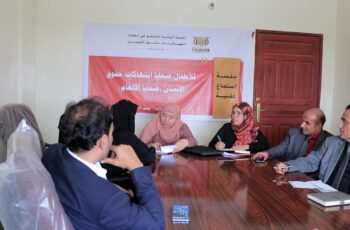
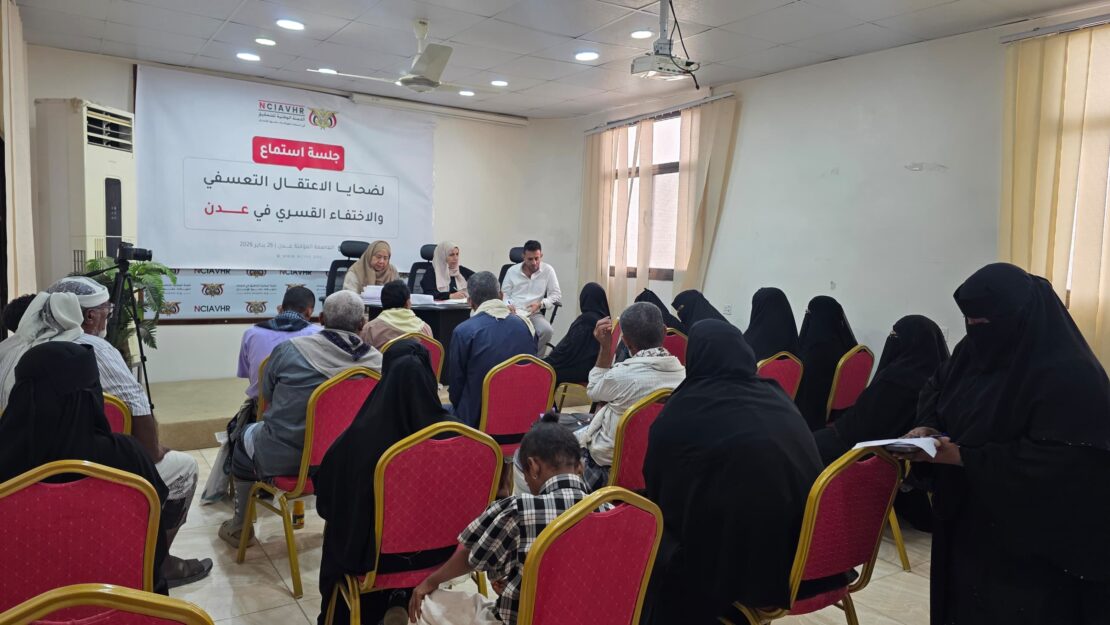
Today in the interim capital, Aden, the National Commission to Investigate Alleged Violations of Human Rights (NCIAVHR) conducted a public, collective hearing session for victims of arbitrary arrest and enforced disappearance since 2015. This session forms part of the Commission’s ongoing activities in holding public hearings for victims of human rights violations across various governorates, in line with its legal mandate.
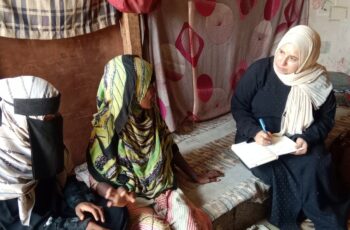
During the session, Commission members Judge Jihad Abdulrasool and Judge Diaa Muhairez listened to direct and detailed testimonies from several victims of serious and systematic violations, namely arbitrary detention and enforced disappearance. The testimonies included accounts of victims’ experiences and perspectives, as well as statements from their families, reflecting the violations they endured, including home raids and deprivation of liberty. These accounts were supported by documents and information related to the incidents and the alleged responsible parties.
Victims also described the psychological impact and humanitarian consequences of these violations on their family lives and livelihoods, calling on the state to release their detained relatives and to hold those responsible for these violations accountable.
These hearings are conducted as part of the approach adopted by the Commission as one of the mechanisms of transitional justice, aimed at uncovering the truth about violations that contravene national laws and international human rights instruments. This is recognized as a right guaranteed by law to all citizens, while taking into account the best interests and dignity of victims and ensuring the protection of their personal data.
The Commission affirmed that justice cannot be built without acknowledging and documenting what victims and survivors have endured, as this contributes to strengthening the principle of legal accountability, combating impunity, ensuring justice for victims, and providing reparation for the harm they have suffered.