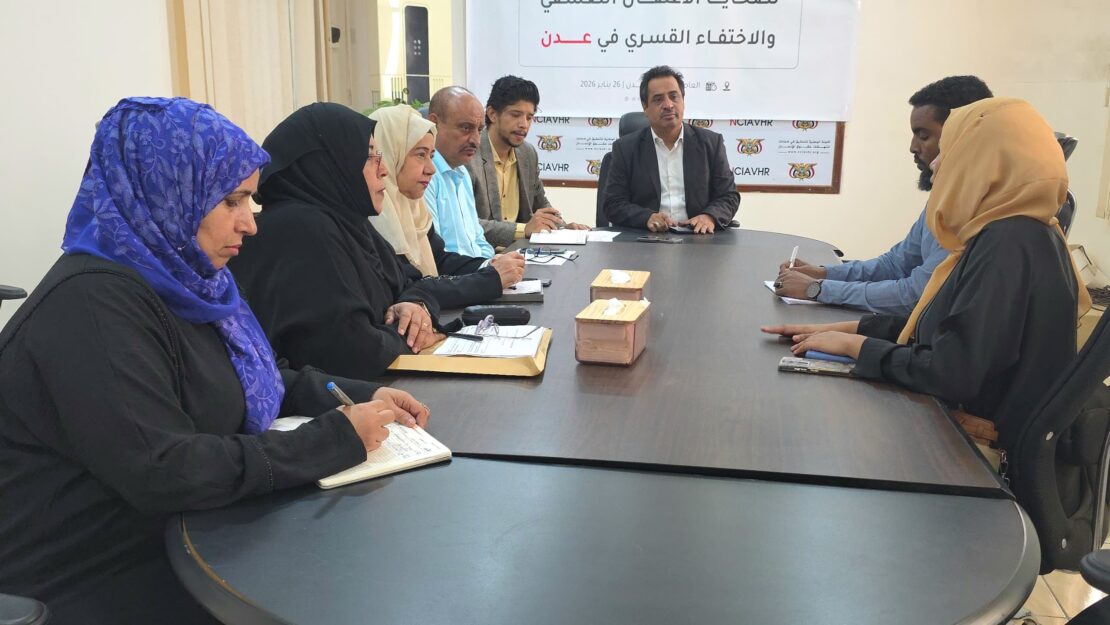
NCIAVHR Meets with a Delegation from Geneva Call in Aden
Aden | Tuesday, 12 May 2026
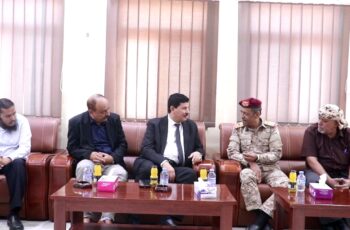
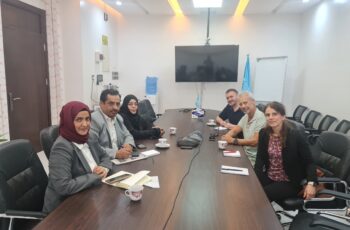
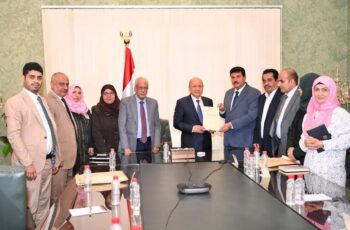
The National Commission to Investigate Alleged Violations to Human Rights met today, Tuesday, with a delegation from Geneva Call at the Commission’s headquarters in the interim capital, Aden. The delegation included the organization’s Regional Director, Daoud Hermoj, and Project Coordinator, Donia Ahmed.
During the meeting, the Vice Chairman of the Commission, Judge Hussein Al-Mashdali, welcomed the delegation and praised their interest in learning about the Commission’s work and activities in the fields of monitoring, investigation, and documentation. He stressed the importance of strengthening cooperation and joint coordination in support of efforts to protect human rights.
Judge Al-Mashdali explained that the Commission is currently preparing a special report on prison conditions and detention facilities, in light of the challenges and violations witnessed during the recent period, which require further monitoring and documentation. He also highlighted the importance of benefiting from technical and specialized expertise in this field.
He further referred to the issue of enforced disappearances and the cases documented by the Commission in the interim capital, Aden. He noted that the Commission continues to follow up on this issue through coordination and communication with the relevant authorities and institutions, calling on the organization to contribute technical support related to the examination of the remains of victims of enforced disappearance.
During the meeting, which was attended by Commission members Judges Nasser Al-Awthali, Jihad Abdulrasoul, Sabah Al-Alwani, and Diaa Muhairiz, a number of issues of mutual interest were discussed, including the Memorandum of Understanding signed between the Commission and the organization several years ago, and ways to activate and further develop areas of joint cooperation.
The two sides also discussed several priorities related to capacity building, training, and enhancing the efficiency of the National Commission’s staff, in addition to the possibility of benefiting from specialized expertise in the fields of weapons, documentation, psychosocial support, anti-torture efforts, and the use of artificial intelligence in monitoring, analysis, and documentation.
For their part, the organization’s delegation reviewed the key activities and programmes implemented by the organization on the ground, as well as the targeted groups and entities benefiting from them. They reaffirmed the organization’s commitment to continuing cooperation with the National Commission in a manner that strengthens efforts to protect human rights and supports justice and accountability processes.