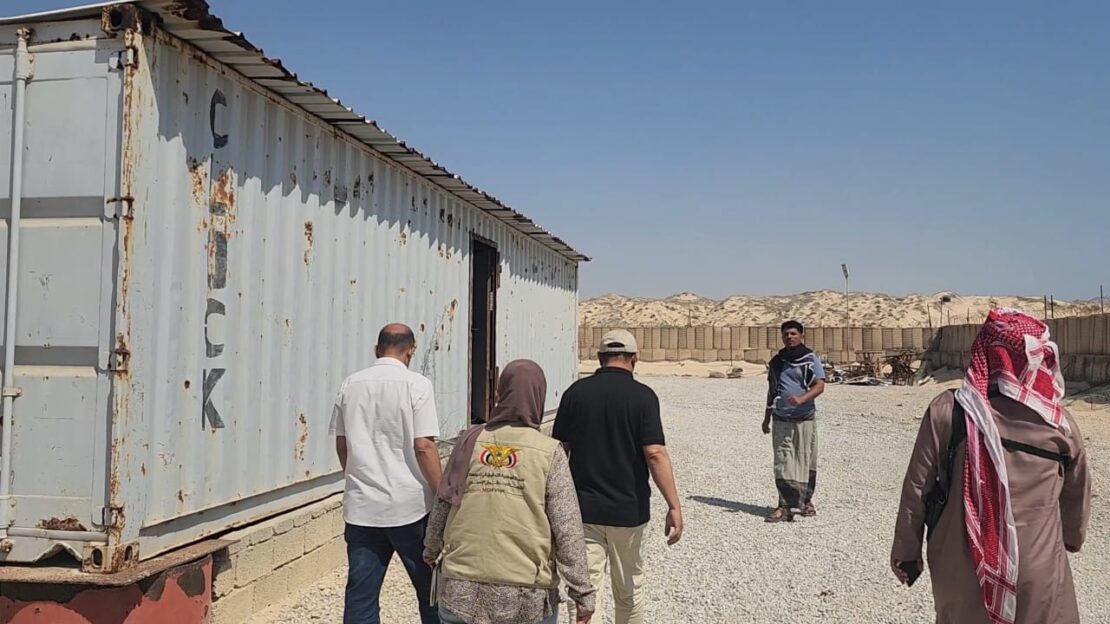
NCIAVHR Conducts Field Inspection of Sites Used as Illegal Prisons and Detention Centers along the Hadramout Coast
Mukalla | 20 January 2026
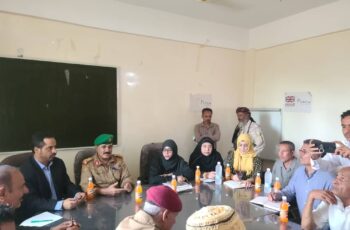
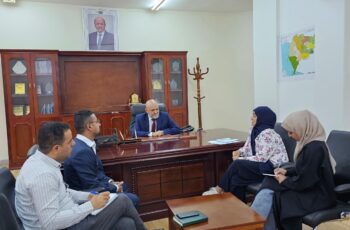
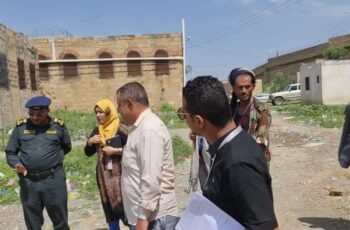
The National Commission to Investigate Alleged Violations of Human Rights (NCIAVHR) conducted a field visit to inspect and examine several sites along the Hadramout coast that former victims reported had been used as illegal prisons and detention centers. This activity comes as part of the Commission’s ongoing investigations into human rights violations in the governorate over the past years.
The field visit falls within the Commission’s on-the-ground investigative work into allegations of arbitrary detention, torture, and enforced disappearance, in violation of relevant international human rights conventions and standards.
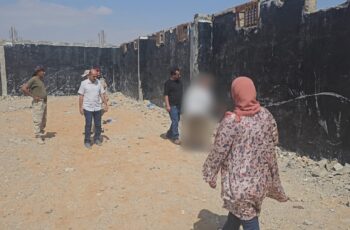
During the three-day visit, members of the Commission—Judges Hussein Al-Mashdali, Nasser Al-Awadhli, Mohammed Tulyan, and Ishraq Al-Maqtari—inspected three facilities located in the city of Ash-Shihr on the Hadramout coast, situated among public service facilities. The inspection included examining detention rooms and their annexes, collecting available physical evidence, personal belongings of former detainees and prisoners, as well as tools suspected to have been used for restraint.
The Commission also documented and photographed the facilities and rooms, collected precise digital data related to spatial measurements and the construction standards of detention rooms, and assessed detention conditions, including health, psychological, and physical aspects, based on testimonies provided by victims who reported having been held at those sites.
Written and visual data obtained from detention rooms and cells were recorded and examined for use in investigative procedures linked to victims’ statements and witness testimonies. The Commission noted that it will continue with the stages of analysis, review of testimonies and direct complaints, and the verification of physical evidence and field inspection outputs, reflecting the results within the victims’ legal case files.
The Commission affirmed that these measures are part of its efforts to combat impunity for crimes of torture and enforced disappearance and to ensure reparations for victims. It also expressed appreciation for the trust shown by victims in submitting testimonies and complaints and for their cooperation in the pursuit of justice and redress for those affected.